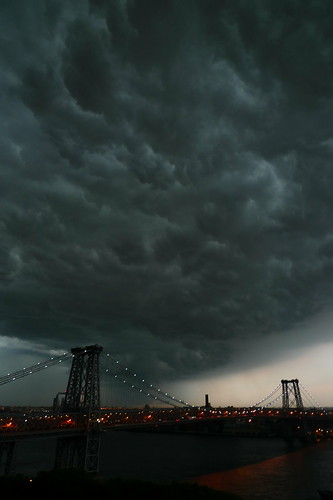
the real triumph could be that i didn't drop a chunk of sparkler between my toes this time. (photo by george)

[The stories] were all about men, mostly in their late twenties or early thirties, mostly with an aspiration that they'd given up because of a marriage or a dead relative or a fear about not being good enough: the singer-songwriter who performs as a cowboy-clown at children's birthday parties and finds himself doing a gig at the house of his high school girlfriend; the minor-league baseball player forced to decide between new love and an unexpected ascension to the majors. There was a sweetness and earnestness to the stories that Juliet had at first found winning. The men were smart and self-effacing, the details about domestic routines spot-on, the characters' neuroses believable and exaggerated ever so slightly for comic effect. But Juliet also noticed in that third read that the women of the book were all blandly noble and long-suffering, and while the man-child narrator worked through his feelings of inadequacy, making such frequent comment about his failings that you couldn't help but think extremely well of him, to believe him enlightened, his girl stood by, full of spunky good sense and patience, never angry, never granted the luxury to be small or selfish. The clown story, "On the Redemption of Roy Rogers," ended with the narrator, still in grease paint, giving his high school girlfriend a long, tender kiss while her husband and the children at the party are outside taking pony rides (and of course there had already been a comically gloomy contemplation of the pony's being a gelding). "I kissed her," the last line went, "reclaimed her, while outside her husband and the pony walked a slow and never-ending circle, no sunset in sight."tin house's summer reading issue also boasts "annie duels the sun," a boss angie wang cover (wang's work frequently features heroic gals; "despite being stalked, bombed, or forced into submission, these young women persevere. if they're not already in escape mode or recovery, they are ready to unleash their power"), and an impressively plausible celebration of cooking with friends, a middlebrow, tv-themed collection of recipes developed on the down-low by jack bishop (who helped launch cook's illustrated and set the tasting protocols for america's test kitchen). i just ordered it as a bonus gift for the wedding we're attending next weekend.
[...]
"You want to tell me something about my book, I suppose. Well, enlighten me, Miss New York Press."
"That's Mrs. New York Press," Juliet said. "To you."
"Mrs., then. Enlighten me."
"If they were to make movies out of your stories, John Cusack would play the lead in every one of them."
(holly goddard jones, "the right way to end a story,"* tin house #52)
SEEi did work up a sweat chasing lady macbeth in sleep no more (an immersive, interactive, macbeth-adjacent hipster theatre experience) back in december, and i wondered, therefore, if i could still count macbeth as shakespeare i had yet to see. i've developed a fondness for alan cumming's saucy introductions to masterpiece mystery! programs, and i found an empty seat in the center of the front row for fifty bucks, so i went for it.
Alan Cumming’s One-Man Macbeth
What: The quirky Scottish actor takes to the stage for a solo rendition of the Shakespeare classic set in a psychiatric ward.
Why: You worked up a sweat chasing Lady Macbeth in Sleep No More. Chill out for this one.
When: Today-July 14.
Where: Rose Theater, Broadway, at 60th St. (212-875-5766). Tickets ($50-$100) at lincolncenterfestival.org.
On his first free day since he was born Samuel sat with a loose girl in a locked bathroom over a teashop, the dirty curtains were drawn, and his hand lay on her thighs. He did not feel any emotion at all. O God, he thought, make me feel something, make me feel as I ought to, here is something happening and I'm cool and dull as a man in a bus. Make me remember all the stories. I caught her in my arms, my heart beat against hers, her body was trembling, her mouth opened like a flower. The lotus of Osiris was opening in the sun.the dylan thomas collection i found at mast books a few months ago - with a photo of a man with his little finger lodged in a bottle of bass on the cover, and a child's blue ball-point scribbles on the last few pages - could be the first thing i've read in a decade that makes me want to be a novelist. not any novelist, mind you, but the novelist to finish that novel (thomas stopped writing it after four chapters).
"Listen to the old birds," she said, and he saw that the hot water was running over the rim of the washbasin.
I must be impotent, he thought.
"Why did he cut his throat like that, Polly? Was it love? I think if I was crossed in love I'd drink brandy and whisky and creme de menthe and that stuff that's made with eggs."
"It wasn't love with Mr. Shaw. I don't know why he did it. Mrs. Bentley said there was blood everywhere, everywhere, and all over the clock. He left a little note in the letter rack and all it said was that he'd been meaning to do it ever since October. Look, the water'll drip right through into the kitchen."
He turned it off. The birds stopped singing.
"Perhaps it was love, really. Perhaps he loved you, Polly, but he wouldn't say so. From a distance."
"Go on, he had a limp," she said. "Old Dot and Carry. How old are you?"
"Twenty."
"No, you're not."
"Well, nearly."
"No, you're not."
(dylan thomas, from adventures in the skin trade)
This unique fragment, half fictional though it is, carries the unmistakable stamp of [DT's] personality. It is real now because it was once real to him, and because it holds the key to a certain attitude to the world and to a situation which was peculiarly his own. This attitude, which may be defined as a rooted opposition to material progress, he continued to hold long after he had abandoned work on the novel. Its anarchic fantasy appealed to him, and it is one more example of the poet's indifference to reputation, of his refusal to follow the advance guard of his fame.sam never gets free of the bottle, not even when the wicked polly convinces him to remove all of his clothes, get into someone else's cold, dirty bath, and drink a full glass of eau de cologne ("'Christ!' he said in a clear, ordinary voice. 'Christ!'"). it's a damn shame.
(vernon watkins, in his introduction to adventures in the skin trade)
I took Philip for a walk. He tired easily, but his gait was significant. He tended to clutch his hands behind his back, like the vexed ruler of something about to disintegrate.if you relish the prospect of a book-length version of this - a verbally-confident narrator who does little donuts in his word-jalopy, a creepy child, paragraphs in which returns diminish - the ask is for you. but i'm getting ahead of myself; let's begin again.
"How about a brother or sister?" I asked.
"How about I just pooped," Philip said.
"Thanks for your input."
Peg always said I shouldn't model sarcasm for the boy, but who will? Everybody's so earnest around children. Besides, I've always wanted to model. To strut down the runway under all that strobe and glitter, while the fashion aristocrats cheer on my sarcasm.
What makes “The Ask” work so well is the way it dovetails its characters’ self-loathing with their self-consciousness. For instead of making its characters blind — a strategy upon which much farcical writing since “Don Quixote” has depended — it gives them 20-20 vision but endows them with perfect impotence. Milo and Don and Maura and their colleagues have more depth than many of the celebrated satirical characters of the past, and Lipsyte’s great accomplishment is to pull this trick off without trumpeting it. His characters are intelligent, even hyperintelligent — they’re nobody’s fools, clearly — but finally their weakness is near-infinite.she could be right about publishing. she's totally wrong about lipsyte. impotent characters are fine with me when they're instrumental; i don't necessarily need them to teach me things about how the world works, as, say, kafka's do, but i need them to move me, or at the very least to make me laugh. lipsyte's milo, an overeducated and -fed toddler-father living with his wife in queens and leering his way through throwaway jobs in higher education, does none of those things.
[...]
It’s as if publishing is afraid to be both literary and funny anymore — as though, in hedging its bets against the competitive advantage of other media, publishing fears the literary comedy and even more the literary satire. And we’re a weaker intellectual culture because of it: other forms simply don’t do the same work that great satirical literature does. It takes fiction, with its subtlety and interiority and sentence rhythms and essential made-upness, to marry the individually uproarious to the systemically tragic in a way that can be laughed at without, finally, also being laughed off.
Back in high school, I remembered, a soothing way to fall asleep after picturing tremendous breasts in burgundy bras (yes, the image pre-dated Vargina) had been to conjure the crimson blossom of bullet-ripped concert tees, the hot suck and pour of flamethrower flame over pep rally bleachers. Typical teen shooter fluff, though I was worried I'd inherited my grandmother's nutcake gene. I was fairly popular. Why did I slaver for slaughter?passages like these make me feel like the house centipedes that blunder out of the drain in our bathroom once every six months or so. they try so hard to scramble up the sides of the drinking glasses with which i catch and release them to the balcony; as those legs and legs and legs catch on nothing and nothing and nothing, i imagine their little mugs look like i did as i reread the first four chapters of the ask on the way to columbus circle this morning. where am i expected to get with this? why am i so angry?
The visions had stopped in college. Some huge and dainty hand peeled them off my skull walls.
I became a painter, at least at parties. I was happy for a time.
But now, riding the trains, or else home sitting with the bills, the old terrible feeling returned. Whenever I checked my bank balance the terrible feeling welled up in me. The goddamn asks, I'd sweep them with a Maxim gun or some other wipeout device whose history I learned of late at night on the war channels, a glass of Old Overholt rye on my knee. I was not bad off compared to most of the world. Why didn't anybody do anything? We could get a few billion of us together, rush the bastards. Sure, a good many of us would die, but unless the asks popped off some nukes, eventually they'd get overrun.
What was the holdup?
*previous battle here.
**the only other time i got that angry in the middle of an assignment was when i filled the last two pages of my film class's final blue book with vitriol about judy garland's stupid eyebrows after having to watch "the trolley song" from meet me in st. louis ten times in a row. i got a gentleman's B.