Showing posts with label thundertome. Show all posts

04.15.13

fuego

CONSUMED AT THE END OF FEBRUARY AND BEGINNING OF MARCH: A PARTIAL LIST.

atonement (book). i didn't love atonement nearly as much as paul did when he mentioned it here 11(!) years ago - cecilia's green dress is my favorite part of both the book and the film, it seems - but i do think ian mcewan nailed little briony tallis's sinister preadolescent mind and/or something sinister and preadolescent about a certain kind of writer (was i that awful when i was a tween writer? i like to think i was interested in making things rather than controlling things, but i also like to think that keeping a domino in my purse protects me when i travel). i brought a copy of amsterdam (winner of the '98 booker prize) home a week ago; if it wows me, i reserve the right to gush about mcewan as hungover twentysomething paul did.

beasts of the southern wild (film). little quvenzhané wallis earned her best actress academy award nomination; like katniss in the hunger games, hushpuppy (a girl who lives with her father in a postapocalyptic louisiana bayou) is hermetically sealed and must have been hell to play. happily, she's given the voiceovers katniss needed so badly to explain herself and her situation; unhappily, those voiceovers and the awkward beasts that (should have been a straight metaphor but actually, awkwardly) turn up at the end of the movie are its only sources of momentum. beasts is a beautiful film, but it stagnated in ways that didn't always feel deliberate. joe fell asleep for an hour of it, and when he woke up i...didn't really have to get him up to speed.

dead man down (film). joe and i needed a reason to go to nitehawk cinema in williamsburg on a friday afternoon a few weeks ago, and a new noomi rapace thriller directed by niels arden oplev (he of the original, swedish girl with the dragon tattoo films) worked for us. to our surprise, it also turned out to be the mysterious generic colin farrell thriller that filmed down the street from us last summer, so noomi and colin conduct their convoluted revenge plots and romances (plural, there, in both cases) in our local basketball courts, kosher delis, luncheonettes, and so on. (they do not go to doughnut plant, not even once, so realism this ain't.) it's really, really terrible, so unless you too live in co-op village or have a thing for fireflies in graveyards (there is one extremely cool scene of that sort, shot out near joe's office in queens, weirdly enough), it's probably safe to keep walking.

dersu uzala (film). ian frazier's goddamn fantastic travels in siberia, a nonfictional tale of flamingos and forcible watermelon donations and weddings in the middle of the road (and the book that would've killed the long ships and emerged the champion of THUNDERTOME II, if i'd either finished it before the end of the year or managed to keep up on THUNDERTOME at all), led me to dersu uzala, the first movie kurosawa made after his 1971 suicide attempt. it's a very un-kurosawa kurosawa film, or perhaps his most characteristic film of all: in slow, dreamlike takes, it follows the russian explorer vladimir arseneyev and his yoda-like nanai guide, dersu uzala, as they chart the forests and tundra of eastern russia. it's a buddy movie with almost no dialogue, and it's possible dersu's longest conversation is with a tiger; that said, the relationship between the two men develops solidly enough that the scenes at arseneyev's home back in khabarovsk, when it's clear that dersu can't leave the hills to retire with his friend in the city, are genuinely wrenching. (truth be told, i usually have little patience for kurosawa - but this i liked.) come for the tigers; stay for the tigers, and stay some more for intercultural bromance.

the diviners (book). the television in front of my treadmill at our building's Old Folks' Gym was tuned to urban tarzan a few weeks ago. the episode began with an alligator amok in someone's backyard, then barreled into the tale of a bull that had escaped into a corn maze in encino. what more, i wondered as i zombie-ran the last of my daily miles, could urban tarzan (john brennan, a freelance wild-animal wrangler) possibly face? then he was called to tackle a chimpanzee in overalls who'd downed a few bottles of codeine ("it calms him down," his human 'mother' explained) and was menacing his caretakers with a gun. the diviners is kind of like the harrowing tale of buckaroo the gun-toting sizzurp-addled chimp: set in new york city in the roaring twenties, it's the story of a psychic flapper who has to prevent a demonic doomsday-cult-leadin' ghost-man called naughty john from initiating armageddon with a series of se7en-ish ritualistic murders. she does so with a team of period-appropriate x-men (including a mysteriously violent ziegfeld girl, an immigrant pickpocket who can go unseen, a dapper healer from harlem, and an old-timey cyborg) and catchphrases ("the cat's pajamas," "pos-i-tutely," "the bee's knees," "done-ski"). i wanted to hate the diviners, but just when i thought i'd had too much, the muchness itself became almost sublime. also naughty john was quite scary! i will read the sequel, and the sequel's sequel.

the flick (play). "i'm just trying to accurately portray the people who live in the movie theater inside my head," playwright annie baker says, "and i guess there's a lot of moments of not-talking in that movie theater inside my head." the flick is literally a (single-screen) theater (in western massachusetts); the fourth wall between baker's audience and her characters is the movie screen itself, and the flick takes place mostly in the spaces between films, when popcorn needs sweeping, reels need changing, seats need de-gumming. the silence in those spaces is so substantial that the play became a little notorious for driving people out at intermission, and playwrights horizons's* artistic director actually wrote his subscribers an email defending it. no need from where i was sitting: the play was long, sure, and a bit of a letdown after the impossibly tantalizing piece on baker in the new yorker a few months ago, but it was sweet, and sad, and it reminded me of the marvelous peoplewatching i got to do as a film festival volunteer last year. annie baker...curates...people? "i so much prefer confusion and mystery in both writing and theater-going," she says, but i don't think that's so. her stuff resists reduction, is how i would put it, and i think that's a fine thing.

*playwrights horizons, incidentally, is my new favorite (non-shakespeare-adjacent) theater. joe and i saw the whale there a few months ago (here's to you, MDF) and are settling in for a long-term relationship (are we those new yorkers now?).

08.29.12

THUNDERTOME II: ROUND 11

SURVIVOR:
the long ships (frans g. bengtsson)*
CHALLENGER: neon angel: a memoir of a runaway (cherie currie with tony o'neill)

bookstore browsers (those still exist where you are, right? bookstores, i mean) could be forgiven for being a little fuzzy on the connection between neon angel, cherie currie's memoir, and floria sigismondi's the runaways (the 2010 biopic starring dakota fanning as cherie and kristen stewart as joan jett). as far as i can tell, neon angel was first published in 1989 as nonfiction for young adults; currie rewrote it (with a different cowriter) in 2002 to "tell the stories [she] couldn't tell in [her] young-adult book" and "bring it up to the present." the updated story was optioned as a film, and...then purchased and published, also in 2010? nuts and bolts aren't currie's strong suit, though she still tells a good story.** let's move on to that.

currie had the kind of relationship i wish i'd had with david bowie; she hit her teen years in the san fernando valley in the seventies, and her formative show at the universal ampitheatre in LA, the lucky little thing, was bowie on his diamond dogs tour (mine, in turn, was the cure on the swing tour***). echoes of her musical adolescence seeped into mine via the local FM stations; rodney bingenheimer, he of the storied english disco, was on KROQ as of 1976 and kept at it straight through my radio years. along with the sugar shack, that disco was ground zero for underage glam-rock kids like cherie and her twin sister marie, who'd duck out of the house looking like the wakefield twins and slither into platforms and body glitter in a gas station bathroom (fellow survivors of southern californian gas station bathrooms, i salute you). after one such reverse-molt, they met record producer (and allegedly epic creepster) kim fowley and joan jett; marie wasn't interested in their girl-band pitch, but cherie was all ears, and she was soon a runaway (fowley and joan jett wrote "cherry bomb" at cherie's audition; she'd arrived ready to sing suzi quatro's tragically unsuitable "fever" cover, so they dashed off a new song to give her material). rock and bitchiness—two of my favorite things—ensued.

On Lita Ford: "Every so often she would make bitchy comments about how skinny I was, and it was obvious this was because she was starting to have some weight issues of her own. Weight issues as in she was getting a fat ass. When you live on a diet of cheeseburgers and beer, keeping in shape ain't easy. That's why I'd only eat fish and vegetables—that drove Lita fucking nuts."

On Etiquette: "After [Cheap Trick] finished their set, Kim grabbed me—literally right as I was about to walk onstage—and said, "Someone wants to say hello!" I thought maybe it was my family—Kim had insisted that we couldn't see our families until after the show, though.
  "Oh, yeah?" I said, and turned, only to find myself face-to-face with Rod Stewart.**** What do you say when you are confronted with a bona fide legend in the music industry? I just smiled and said, "Nice to meet you, Rod." It didn't end there. Marie and I ended up snorting coke with him and Ronnie Wood at Rod's mansion following the after-party. Talk about life in the fast lane! Rod was as drunk as a skunk, and actually started crying when I pulled out the coke.
  "Oh my God!" he said, with tears in his eyes. "Nobody EVER gives me blow! I'm always the one expected to have it! You're so kind! Thank you..."

On CBGB: "[T]he audience was a mixture of bums and art-school freaks, a show that landed us an article in People magazine. I remember we played alongside Television (who played very long guitar solos) and Talking Heads (who had a female bass player, and a really weird, pale, and sweaty lead singer). "You girls should stay out of the bathroom," [a roadie] had warned us. "I've been in there, and it ain't pretty."*****

as someone who deals with ladies and stories and lawyers all the time, it fascinates me that currie is able to tell her story as she does. she opens by noting that "all incidents and dialogue are to the best of the author's recollection and knowledge," and that "[s]ome identities were changed to protect the innocent, and in some cases, regrettably, the not so innocent," which...would keep me awake at night, were i her editor. were the seventies so sketchy that one can just whip out sex, drugs, and rock and roll anecdotes with relative impunity? (i'm familiar with the customary answer, but currie's "adult" anecdotes involve rape and kidnapping; i'd love to know which identities were obscured). opportunities for accusations of libel aside, though, what sticks with me about her narrative is the ultra-mundane stuff: she opens with earnest, thoughtful tales of that mind-blowing bowie concert, her parents' separation, and the evolution of her self-confidence. i read keith richards's life in the months between my first and second passes through neon angel, and in all seriousness—particularly for those of us who will never need to master the intricacies of open G tuning—currie's is the more enjoyable book. she's more active in the way she talks about her former bandmates, even as she criticizes them; she takes the time to recreate the events of her life instead of indicating points of interest like a bored tour guide. david mitchell she ain't, but i like cherie currie; i believe she gives a shit.

VICTOR: the long ships; both tales were harrowing (and currie's boasts an amusingly ambivalent foreword by joan jett), but one must write like a viking to best vikings.

imaginary reading group discussion questions

01 would you be pleased or dismayed to find your "sorry i haven't posted" blog entry on cory arcangel's blog (which consists entirely of them)?
02 when was the last time you were in a bookstore? which one was it?
03 what was the formative show of your teens?
04 what would you do with CBGB's bathroom door?
05 why do you think cherie's sandy west memorial chainsaw sculpture [runaways drummer sandy west died of lung cancer in 2006] was of a mermaid playing guitar instead of a mermaid playing the drums?
06 if you've read keith richards's life, did it improve or lessen your opinion of ol' keef?
07 if you're a fan of groups which are mostly ladies, which is your favorite?

*previous battle here.

**which i have now read twice; i'm so far behind on THUNDERTOME at this point that my poor old memory, never a finely-oiled machine, needs a kick here and there. sad.

***i'd begged my mom to let me see bowie and nine inch nails at the forum the previous fall, but i got nowhere. man was she smug afterward when rumors started circulating about stabbings in the mosh pit.

****i passed rod stewart in a crosswalk on eighth avenue yesterday afternoon. he was eating a granola bar, placid as the buddha.

*****one of my fellow editors here at the ladymag grew up in the city and met her husband at CBGB; when it was gutted and became a john varvatos boutique a few years ago, someone saved the bathroom door and gave it to her.

06.11.12

THUNDERTOME II: ROUND 10
SURVIVOR: the long ships (frans g. bengtsson)*
CHALLENGER: the ask (sam lipsyte)

i was, i will admit, a bit worried that the many months between the one in which i finished the ask (october, maybe?) and this one had somehow distorted the way i feel about sam lipsyte's writing. then, as if assigned by the universe's own deputy fairness editor, lipsyte's short story "the republic of empathy" appeared in the new yorker's science fiction double feature and became my subway reading last week. a refresher! what luck! a snippet:
I took Philip for a walk. He tired easily, but his gait was significant. He tended to clutch his hands behind his back, like the vexed ruler of something about to disintegrate.
"How about a brother or sister?" I asked.
"How about I just pooped," Philip said.
"Thanks for your input."
Peg always said I shouldn't model sarcasm for the boy, but who will? Everybody's so earnest around children. Besides, I've always wanted to model. To strut down the runway under all that strobe and glitter, while the fashion aristocrats cheer on my sarcasm.
if you relish the prospect of a book-length version of this - a verbally-confident narrator who does little donuts in his word-jalopy, a creepy child, paragraphs in which returns diminish - the ask is for you. but i'm getting ahead of myself; let's begin again.

it has been argued that it's incredibly difficult to write long-form satire. i agree; i vaguely recall liking the harvard lampoon's bored of the rings, but that probably says as much about my surplus of affection for j.r.r. tolkien as it does about the caliber of the poonies' vietnam jokes (and either way, i was exceedingly tired of the name "dildo bugger" by the time i put that book down). moving higher up the brow, it's no accident that "a modest proposal" is, well, swift, or that the new yorker's "shouts and murmurs" humor pages top out at two pages of ha-ha, max. being funny at length is no mean feat, and being funny at length while telling a meaningful story is, i would imagine, very nearly impossible. unsuccessful book-length satire, moreover, is bad like a cobra: i hated david lodge's nice work (a self-satisfied rumpity-bumpity novel about university politics and corporate shenanigans and crap) so much when forced to read it in college that i re-read elizabeth gaskell's north and south (the earnest, industrialism-can-grow-a-heart! 1855 novel which gave rise to lodge's book, sort of) so that i could write a twice-as-long-as-required essay in which i did my best to beat the former to death with the latter. david lodge makes richard whitely look like lenny bruce.**

deep, slow breaths. in, out. at the other end of the spectrum, i think gary shteyngart (the russian debutante's handbook, absurdistan) marries satire and sentiment pretty well, though he sometimes takes awhile to get there (i'll talk about that if i ever manage to THUNDERTOME super sad true love story, speaking of taking awhile to get places). if lydia millet in the times book review is to be believed, sam lipsyte does, too:
What makes “The Ask” work so well is the way it dovetails its characters’ self-loathing with their self-consciousness. For instead of making its characters blind — a strategy upon which much farcical writing since “Don Quixote” has depended — it gives them 20-20 vision but endows them with perfect impotence. Milo and Don and Maura and their colleagues have more depth than many of the celebrated satirical characters of the past, and Lipsyte’s great accomplishment is to pull this trick off without trumpeting it. His characters are intelligent, even hyper­intelligent — they’re nobody’s fools, clearly — but finally their weakness is near-infinite.

[...]

It’s as if publishing is afraid to be both literary and funny anymore — as though, in hedging its bets against the competitive advantage of other media, publishing fears the literary comedy and even more the literary satire. And we’re a weaker intellectual culture because of it: other forms simply don’t do the same work that great satirical literature does. It takes fiction, with its subtlety and interiority and sentence rhythms and essential made-upness, to marry the individually uproarious to the systemically tragic in a way that can be laughed at without, finally, also being laughed off.
she could be right about publishing. she's totally wrong about lipsyte. impotent characters are fine with me when they're instrumental; i don't necessarily need them to teach me things about how the world works, as, say, kafka's do, but i need them to move me, or at the very least to make me laugh. lipsyte's milo, an overeducated and -fed toddler-father living with his wife in queens and leering his way through throwaway jobs in higher education, does none of those things.
Back in high school, I remembered, a soothing way to fall asleep after picturing tremendous breasts in burgundy bras (yes, the image pre-dated Vargina) had been to conjure the crimson blossom of bullet-ripped concert tees, the hot suck and pour of flamethrower flame over pep rally bleachers. Typical teen shooter fluff, though I was worried I'd inherited my grandmother's nutcake gene. I was fairly popular. Why did I slaver for slaughter?
The visions had stopped in college. Some huge and dainty hand peeled them off my skull walls.
I became a painter, at least at parties. I was happy for a time.
But now, riding the trains, or else home sitting with the bills, the old terrible feeling returned. Whenever I checked my bank balance the terrible feeling welled up in me. The goddamn asks, I'd sweep them with a Maxim gun or some other wipeout device whose history I learned of late at night on the war channels, a glass of Old Overholt rye on my knee. I was not bad off compared to most of the world. Why didn't anybody do anything? We could get a few billion of us together, rush the bastards. Sure, a good many of us would die, but unless the asks popped off some nukes, eventually they'd get overrun.
What was the holdup?
passages like these make me feel like the house centipedes that blunder out of the drain in our bathroom once every six months or so. they try so hard to scramble up the sides of the drinking glasses with which i catch and release them to the balcony; as those legs and legs and legs catch on nothing and nothing and nothing, i imagine their little mugs look like i did as i reread the first four chapters of the ask on the way to columbus circle this morning. where am i expected to get with this? why am i so angry?

in a breathless review for the guardian, the novelist geoff dyer points to "strong traces of...Don DeLillo" in lipsyte's writing. "Characters are recruited and scenes contrived solely for the pleasures of setting up a two- or three-person groove, to riff on and report back from the leading edge of language." never mind the interchangeable voices, the particle-board personalities, the ditties that never really begin or end; the riff's the thing!

forgive me for referring you once again, dear readers, to infinite jest, the big boss battle waiting for all post-modern writers who fancy themselves masters of humor and structure - but you see, one doesn't need to flip back through it to remember what madame psychosis sounds like, to be reminded of what happened to don gately, to know whether or not the jokes buried in the endless footnotes were funny, to get the point. it's been years since i last read it all the way through (i'm overdue for a reread, actually), and i'm still dead certain the chapter headings alone could take the ask in THUNDERTOME. am i saying sam lipsyte doesn't do it for me because he's not david foster wallace? yeah, i guess i am; i need satire with a big old bleeding heart, a punch line with actual punch. not characters with character - i can handle the fact that milo is a schmuck - but a reason to stick around for three hundred pages. there isn't one here.

VICTOR: the long ships; the ask should be abandoned in shark-infested waters.


imaginary reading group discussion questions

01 how many times have you heard the trolley song? could you stand to hear it again?
02 when was the last time a book made you hulk-mad? what was it?
03 have you ever had to deal with a house centipede?
04 have you read the ask, or lipsyte's recent piece in the new yorker? do you think he's funny?
05 is it fair to expect chewy emotional nougat at the center of satire?
06 is it fair to expect pomo writers to be better than david foster wallace?
07 how do you feel about jazz?


*previous battle here.

**the only other time i got that angry in the middle of an assignment was when i filled the last two pages of my film class's final blue book with vitriol about judy garland's stupid eyebrows after having to watch "the trolley song" from meet me in st. louis ten times in a row. i got a gentleman's B.

04.19.12

THUNDERTOME II: ROUND 9

SURVIVOR: the long ships (frans g. bengtsson)*
CHALLENGER: coco chanel: the legend and the life (justine picardie)

quiet designers like rei kawakubo can roll a stick of dynamite under your dressing-room door and change your life forever;** mad uncles like karl lagerfeld chew english like tobacco, launch a thousand art projects, and bore me to tears with their clothes. where in all of that is coco chanel? holed up at the ritz with her nazi lover somewhere in the middle, probably: her contributions to womenswear undoubtedly made my life easier, and her umpty-four versions of her own life story arouse the editor in me, at least. so i spent some time with some of them.

justine picardie's coco chanel is easily the best-looking biography i've ever read; its pages are thick and glossy, and full of dali, toulouse-lautrec, and warhol (an ear of wheat, a revue poster for which her frenemy modeled, and silkscreens of the chanel no. 5 bottle, respectively). it's not especially incisive or heavy on original scholarship, which is par for the course in fashion magazine journalism: picardie*** (the former features director of british vogue) is surefooted as hell as she's discussing how, say, chanel's years in a convent orphanage shaped her approach to accessories, but she's disappointingly tentative (she has lots of theories and quotes, particularly from claude delay's chanel solitaire, but they don't feel cohesive) when it's time to talk about how and why chanel compulsively unraveled and rewove her own bio.****

according to her birth certificate, gabrielle charnet (a misspelling corrected by a court decree twenty years later) was the second daughter of penniless peddlers, born at a poorhouse in saumur on the loire; variations on this theme appear in picardie's pages beside a photo of saumur, six pictures of chanel buttons, and a tarot card from chanel's rue cambon apartment. chanel's father swept in and out of her life, and illness swept in and out of her mother, who finally died when chanel was eleven; she and her two sisters were promptly deposited with the sisters of the congregation of the sacred heart of mary in the medieval village of aubazine.***** after seven years of dark-fairy-tale-esque (at least as far as anyone can tell) nun-drudgery, eighteen-year-old gabrielle cycled through a boarding school in moulins, a draper's store, a music hall (at which she performed "qui qu'a vu coco?" and earned her nickname), and finally to vichy, where she met her first lover, the cavalry officer etienne balsan; he invited her to join him at his estate, royallieu, and her privileged life as a "kept girl" among cocottes and aristocrats began.

balsan's successor (boy capel, an englishman and "playboy industrialist" who helped chanel get started in the millinery business and open her first shop and was killed while driving from cannes to paris in 1919) was chanel's great love; his riding outfits and jumpers were the first pieces she hacked apart and reassembled as her own modernist outfits. the scrappy-luxe woman capel's high-society friends scorned and encouraged him to chuck over is enormously appealing; though both balsan and capel financed her lifestyle and initial forays into the fashion world, coco's own sweat equity made the house of chanel a success. coco circa world war two, a middle-aged, well-established designer by the time the germans got to paris, is less so. that wildly-unsympathetic chanel is the one i really wanted picardie to dissect for me.
That Chanel's wartime record is imperfect is a reflection both of her own inconsistencies, and the inconsistent recording of them. But her conduct should also be seen in the context of an era of French history marked by a widespread sense of chaos, confusion, and uncertainty, as well as terrible tragedy. To acknowledge this is not to act as an apologist for Chanel; and she herself would have been enraged at the very idea, for she declared that she had done nothing wrong in her relationship with the German [hans gunther von dincklage, an officer with whom she had a long affair while she lived at the german-occupied ritz]. Not that he was even German, in her eyes; his mother was English, and he and Chanel spoke English together; an act of solidarity, as if they were setting themselves apart from German-occupied Paris in their own neutral territory, that of Mademoiselle's private apartment at 31 Rue Cambon.

[...]

But perhaps she was unable to see her German lover without obscuring something of the truth, closing her eyes to his past, as well as his passport; just as she had been apparently blind to previous episodes in her own life.
picardie notes that von dincklage, a "distinguished-looking attaché to the german embassy in paris," was "to some observers...simply an affable, occasionally frivolous, diplomat; to others [including other chanel biographers], a german spy." chanel had a new version of her own story for every listener and seemed to disregard fact when it was inconvenient to her, so...since she didn't believe von dincklage worked for the abwehr (the german military intelligence organization), we don't even have to worry about what she knew about his record? i'm unconvinced.

let's skip over chanel's crazy attempts to meet with her old pal winston churchill and broker peace with the germans (fascinating and deeply weird though they were) and forge ahead to what picardie calls "the most troubling episode of coco chanel's history": "in essence she attempted to use the anti-jewish laws of the german occupation to oust [the wertheimer brothers, who eventually owned 90 percent of les parfums chanel, the company which produced chanel no. 5]". picardie emphasizes that "it is difficult to produce any firm evidence of chanel making anti-semitic statements - the accusations against her are rarely backed up by reliable sources," and admits only to a "disquieting ambiguity" in chanel's comments about jewish friends and acquaintances. "the possibility remains," she writes, "that chanel's tactics against the wertheimers may have had less to do with her own anti-semitism than with her increasingly passionate belief that pierre [wertheimer] had done her an injustice by giving her only a 10 percent share in the perfume company." i confess my opinion of her is low either way.

the manner in which chanel reimagined femininity in her designs was revolutionary; that in which she reimagined her past was confusing at the best of times and deeply sinister at others. picardie had her work cut out for her, obviously, and it feels mean to fault her for failing to chase down new and solid information on her subject. or does that mean she shouldn't have attempted a biography in the first place? i've said before and will undoubtedly say again that deirdre bair's anais nïn (on another notoriously slippery française, for which she had unprecedented access to diary manuscripts) is one of the best biographies i've ever read; insight on shady ladies is possible, provided that one has the proper tools. the snapshots here, evocative though they are, aren't those tools.


VICTOR: tell me i'm not alone in relishing the mental image of a chanel boutique pillaged by vikings. the long ships sails on unchallenged.


imaginary reading group discussion questions

01 is it unsporting to take a fashion journalist to task for writing a psych-lite fashion biography? (most reviewers seemed to love picardie's chanel; only duncan fallowell in the daily express takes exception to her unintegrated quotes.)

02 which designers, if any, fascinate you?

03 shifty backstories! forget parenting and dieting; is that where french gals really have us beat?

04 have you ever worn and/or owned chanel? would you?

05 what's your roaring-twenties aristocrat name?

06 is picardie an apologist for chanel? does chanel deserve one?

07 if you had thirty-six hours to spend on the isle of man, what would you do there? (that has nothing to do with chanel, i realize, but i just finished booking a trip there for september and i'm unreasonably excited.)


*previous round here.

**the five minutes i swanned around the comme des garçons store in chelsea in one of her fabric-tornado skirts were the highlight of my clothes-wearing career. we'll meet again, skirt, and i'll wear you nonstop for the rest of my days.

***known to some of you, perhaps, as the gal who just did the gwyneth paltrow cover interview for bazaar's relaunch ("As she falls naturally into yoga stretches during the course of the conversation, supple as a cat, you realize that this is a woman for whom working out has become essential").

****"[chanel] was less willing to remember the year of her birth, 1883, adjusting it when it suited her purposes; even tearing it out of her passport. 'my age varies according to the days and the people i happen to be with,' she told a young american journalist in 1959, when she was 76. 'when i'm bored i feel very old, and since i'm extremely bored with you, i'm going to be a thousand years old in five minutes.'" it's a great, bitchy quote, but it has almost nothing to do with the passage in which it appears; it's just color commentary.

*****picardie's account (for the daily mail) of her own stay at aubazine - for which she, like the sisters who still live there, took a vow of silence - made me appreciate her as a biographer a bit more; i like the idea of her pilgrimage.

01.24.12

THUNDERTOME II: ROUND 8

SURVIVOR:
the long ships (frans g. bengtsson)*
CHALLENGER: louisa may alcott (harriet reisen)

louisa may alcott enthusiasts are a spooky bunch. little women was a pleasant enough childhood read, but the little women (and little men, and jo's boys, and so on) scene is an intense one: like anne of green gables fangirls and little house on the prairie reenactors, the alcott admirers i've met tend to brag about growing up without television and, like, refer to their hair as their glory. while there's nothing formally terrible about either of those tendencies, i'd rather not get trapped in an elevator with someone who exhibited them.

it would be superconvenient re: THUNDERTOME structure if, having read harriet reisen's painstakingly-researched alcott biography, i now felt differently about little women women, or was at least able to tell you that alcott herself wasn't spooky at all. i'm fairly sure i don't, is the thing, and she...is?

by all accounts, growing up alcott was pretty miserable. louisa's father, bronson, a transcendentalist who ran with nineteenth-century luminaries like emerson, thoreau, and hawthorne in massachusetts, had little interest in conventional living arrangements or employment (or, eventually, property**). principles like bronson's are well and good for single, unmoored fellows whose bones are finished growing, but they're pretty lousy for dependent wives and little girls; louisa's long-suffering mother, abby, scrambled to pay the family's crippling debts with help from her relatives (including, at a frighteningly young age, louisa herself; she was her family's principal breadwinner from her late teens until her death), and all of the family starved and froze when he decided they would both adhere to his strict vegetarian principles and subsist on what they could grow and forage at the various utopian communities he attempted to establish (and from which they were perpetually in danger of being evicted).

"but he was a dreamer," you say, "and we should treasure and indulge and nurture our dreamers!" he was also an insufferably self-important pedagogue who, in his attempts at educational reform at various experimental schools in boston and elsewhere, "invited students to defy him and then punished them by public shunning—making visible what it meant to lose god's love" and handed down "lordly dismissal[s] of any views but his own."

papa alcott was a piece of work, is what i'm saying, and in some ways his is the central personality in reisen's book; abby orbited bronson, the girls orbited their parents (whose gravity was immense - abby would read and comment in louisa's diary), and the alcotts' financial responsibilities tethered louisa's writing to the commercial realities of her day.

to say that reisen (also a writer-producer of an alcott documentary) is wildly sympathetic to her subject is, if possible, a huge understatement; in the preface to her biography, she explains that she herself is an alcott addict, and that her hope
[...] is that readers of this book will be inspired to track down the dozen or more of Louisa May Alcott's works whose titles are known but whose whereabouts are not, to bring them forth from obscure periodicals in the backs of old library shelves, attic trunks, even from inside the walls of old houses, as pages of Louisa's Fruitlands diaries were, so they may be published and read as widely as their most recent predecessors have been. If they do, I may never have to run out of new work from the prodigious pen of Louisa May Alcott.
damn, louisa; your biographer so ardent! i'm tempted to admire alcott's devotion to her family for reisen's sake - the latter is a graceful, deft, compelling storyteller, and the story she tells of louisa's refused marriage proposals and truncated trips abroad is nearly heartbreaking - but the truth is that, quoth louisa, "i'd rather be a free spinster and paddle my own canoe." behind the pen name a.m. barnard, she wrote pulp fiction about "spies and transvestites and drug takers" - but she didn't seem to have much interest in the world beyond the family hearth (her brief and disastrous stint as a nurse during the civil war notwithstanding). she sure could fictionalize that hearth and make it sound toxic idyllic, though! what a woman!

i'm aware that louisa may alcott inspired hordes of girls who went on to become accomplished writers. i'm aware that i am in all seriousness a terrible person for disliking her; i console myself, gentle readers, with the thought that if you've been reading kidchamp for long, you knew that already. reisen i like very much (i'd have loved to have taken one of her film classes at stanford), and if she'd managed to work a viking ex machina in at the end of her biography in lieu of louisa's crippling headaches and doping, i'd have considered letting her kilos of research pile-drive bengtsson's fanciful man-book. in its absence, i can but say that i'd happily read another reisen bio, and that i wish her well.

VICTOR: red orm & friends (the long ships), of course, with a sickening squelch. would a book about creepy martyrdom even want to win?***


imaginary reading group discussion questions

01 with whom would you like to be trapped in an elevator?

02 would you rather be trapped in an elevator with kanye west, anthony bourdain, or kirk cameron? death is not an option.

03 at what age is it reasonable for a child to make his or her own decisions about, say, whether or not he or she is a vegetarian?

04 having at that from the other direction: must a parent edit his personal philosophy for the sake of his children? how much?

05 ladies, did you once see yourself as jo march?

06 biography-readers, do you choose your texts for their subjects or their authors?

07 to what tale would you like to append a viking ex machina?


*previous battle here.

**louisa's uncle sam in a letter to emerson about the alcotts: "it is very important that...my sister [abby] and her family might have a shelter...without implicating [bronson] in the sin of living upon soil appropriated to his exclusive use [...] not that I think the plan practicable....but he is so sincere, so devout, so full of faith, that i long to have him try his experiment to his own entire satisfaction."

***"from 1888 until 1950 there was no full-length biography of louisa may alcott, not surprising given her utter lack of critical cachet," reisen writes. "her readers never knew or cared." i'm reminded of a passage of john jeremiah sullivan's, read last night as i waited for the long-suffering m14 bus to take me and my sprained ankle down grand street:

Llewis taught me something. At high school in Jamaica, he said, when your team lost, it was traditional to chant, on your way out of the grounds, "We feel no way! We feel no way!" Meaning essentially, we're not sweating it, we didn't really give a shit anyway.
11.01.11

THUNDERTOME {NOMINALLY-BLOODLESS BOOK CHAT EDITION}: ROUND I

PERFORMER: the magicians (lev grossman)

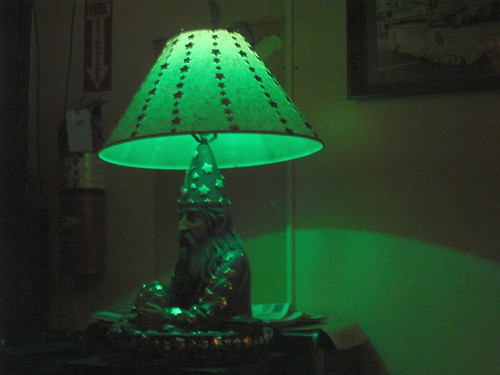
lamps i appreciate, 1

here be spoilers; if you haven't read the book and plan to do so at some point, please enjoy this wizard lamp and avert your eyes from the rest of the post. temporarily-actual reading group discussion questions - also containing spoilers - are at its conclusion.

lev grossman went to harvard and yale; he's a prolific tech journalist, and he's time's book reviewer. each of those points is in his bio, but they don't really need to be; the magicians is precisely the book you'd expect from a guy who's done time at elite schools, chewed on a bunch of cables, and read a lot of books. that's both a good thing and a bad thing, i think; some of its biggest strengths (the pitch-perfect tone of the school scenes, the elegant logic of the magical phrasing the students learn in antarctica and the eerie interdimensional neitherlands, the feel of all the literature that gave rise to this literature) share genes with its faults (quentin is the sort of overeducated douchebag i couldn't wait to get away from after college, so several hundred pages of him can be rough, and grossman's fluency in all things sci-fi and fantasy can have a too-many-chefs effect that's fatal to emotional connection with his story).

grossman's hero, quentin "brooding in brooklyn" coldwater, is bizarro harry potter, at least at first: much to his horror, his parents have provided him with a stable and loving home, he has a pair of reliable friends (who have done him the terrible injustice of dating each other), and he's on track to trundle off to princeton after he winds up his reign as the (academic) king of high school. all of this is terrifically unsatisfying, and he pines for the narnia-esque idylls of christopher plover's mythical kingdom of fillory, where there are two aslans (the rams ember and umber), one gets about with the help of the cozy horse, a living, infantilizing monorail (for my money, the cozy horse is one of grossman's best jokes), and
things mattered in a way they didn't in this world. In Fillory you felt the appropriate emotions when things happened. Happiness was a real, actual, achievable possibility. It came when you called. Or no, it never left you in the first place.
this third-person limited narration (quentin isn't the speaker, but we experience just about everything from his perspective) is pretty challenging for the reader: we have to endure quentin's bottomless self-pity, and we have to work around his world-swallowing self-interest to pick up information about characters and plot points which don't hold his attention. we're also stuck with his emotional vocabulary, which is - high-school boyfriends, i salute you - not the most mature.
Sometimes he burst out laughing out of nowhere, for no reason. He was experimenting cautiously with the idea of being happy, dipping an uncertain toe into those intoxicatingly carbonated waters. It wasn't something he'd had much practice at. It was just too fucking funny. He was going to learn magic! He was either the greatest genius of all time or the biggest idiot. But at least he was actually curious about what was going to happen to him next. For the first time in he didn't know how long he was actually following the action with interest. In Brooklyn reality had been empty and meaningless--whatever inferior stuff it was made of, meaning had refused to adhere to it. Brakebills was different.
on most days i would make much of that take on brooklyn, but in the spirit of the nominally-bloodless book chat, i'll refrain; that's emotional maturity, you see. to be fair, not all of the focus on quentin is problematic; though the life of his mind is the only life he's got, the magicians fetishizes wizard school far less than the harry potter books do. i didn't realize how refreshing it was to gloss over huge areas of quentin's education (sometimes literally, as in when he tests out of his first year) without having to page through baroque descriptions of each teacher, class, spell, and magical-slapstick episode he encounters until grossman pointed it out to me; at some point near the end of the brakebills section of the book, someone mentions how silly it is that each of the twenty-odd parts of the students' desks has a special name (a simple, effective reminder that the school isn't the end or even the bulk of the story here).

the educational vignettes we do get are well-chosen; i loved the sequence in which the students turned into geese and flew to antarctica, and i thought the instruction sequences there were terribly clever. it's no accident that mayakovsky (a fine name) speaks russian; russian grammar is as subjective as the magic the kids are learning (with variations for everything from time to location to the emotional state of the spellcaster), with prefixes and suffixes of each tense so specific to what surrounds it that you can scramble the words of your sentence any which-way and they'll mean the same thing. well done there, grossman; those drills and the marvelous end-of-term trip to the south pole were worth the price of admission on their own.

lest we get too caught up in grossman's creations, he sprinkles a glib bit of meta over the top of quentin's return to brakebills: "wizard needs food badly," his friend josh* notes. i can't decide whether the gauntlet reference pleases or appalls me; as when joss whedon & co dropped a homestar runner reference into the buffy the vampire slayer finale and burninated giles, i enjoyed feeling that the writer(s) and i were working with the same cultural tool box...and felt a bit dirty at the same time. in this case, do present-day college students really joke about twenty-six-year-old atari games? am i underestimating the next generation's nerdery? am i old enough to call present-day college students 'the next generation'? let's move on.

speaking of grossman's tool box, harry potter references aside, there's a lot of the early 20th century in his particular strain of fantasy, and i think it suits him. the beast's appearance in the classroom was equal parts h.p. lovecraft (the explanatory speech the headmaster gives about how beings from other worlds visit ours is boss) and magritte; its extra fingers** and the tree branch in front of its face were terrifying, and just right. the girl in the brakebills fountain who showed the unfortunate emily greenstreet how to remake her face was also quite frightening; her malevolence set us up nicely for the vacant, escherrific spookiness of the neitherlands. somehow those interstices felt more real to me than either the cringe-inducing, post-graduation scenes in new york city (though, to be fair, some twentysomethings do end up in cringe-inducing scenes when in new york city) or the scenes in fillory itself.

on those scenes in fillory itself: the conclusion of michael agger's new york times review kept coming back to me as i was thinking about what i wanted to say about the magicians.
Perhaps a fantasy novel meant for adults can’t help being a strange mess of effects. It’s similar to inviting everyone to a rave for your 40th-birthday party. Sounds like fun, but aren’t we a little old for this?
it's an easy observation to make about genre fiction, and - when one considers spectacular works like buffy the vampire slayer and philip pullman's his dark materials trilogy - easy to swat down. the magicians provides both the sugar rush of shallow fantasy and the deep, soulful twang of shrewd allegory, and they're both all over the ember's tomb sequence (a mishmash of grossman's worst and best ideas). poorly-blocked battles lifted from early-nineties role-playing games (a bee, a house cat, and a giant, burning naked guy! better have my mage cast an elemental shield around the party and swap in the warrior's poisoned gauntlets) and an ill-advised scarface reference at the book's emotional climax? check and check. a heartbreaking sacrifice which highlights the fact that there's no answer here to the "what's magic for?" question,*** and a chilling demonstration of what happens when you can't say goodbye to the cozy horse?**** check and check. the magicians is, unquestionably, a strange mess of effects - but i can't imagine being too old for it.

hey, you made it to the end of my introduction to the book chat! butterbeer for everyone, or regular beer, or whiskey, if you're gluten-intolerant. feel free to tell me i'm dead wrong, or to ignore me and skip to the points below, or to ignore the points below and skip to your own take on the magicians in the comments. i'm just glad you're here.


temporarily-actual reading group discussion questions: extra-long edition

01 do you think quentin's unlikable on purpose? or, backing up, do you like him?

02 will you watch fox's drama series adaptation of the magicians (by the guys who co-wrote x-men: first class and thor)? how would you cast it?

03 in an interview with the village voice, grossman mentioned that he lifted evelyn waugh's structure "more or less wholesale." if you've read brideshead revisited, did you feel bits of it in the magicians? (are eliot and janet sebastian and julia flyte? is quentin charles ryder?)

04 had any of you encountered gonfalons (the term, not gonfalons themselves) prior to the magicians?

05 if you have a tattoo, what sort of being d'you think would erupt from it?

06 did the scarface thing bother you? what about the gauntlet reference? is the magicians too meta?

07 when did you realize the beast was martin?

08 from where you're sitting, what does magic represent in lev grossman's world? is it imagination, intelligence, privilege - or something else entirely?

09 will you read the magician king?


*later on, josh is responsible for the horribly awkward meta that is "the hypothetical contents of an imaginary porn magazine for intelligent trees that would be entitled Enthouse." i read that and felt pain for him, for his creator, and on my own behalf.

**slightly-off beast-features, as in soundgarden's "black hole sun" video and jell-o's current "pudding face" campaign, scare the crap out of me; we're not even going to talk about neil gaiman's corinthian.

***poor alice. i don't think she was giving her life for quentin, exactly; i think she became a niffin because it was better than becoming her parents.

****i was initially disappointed that the beast was martin chatwin, but i've come around.

09.27.11

THUNDERTOME II: ROUND 7

SURVIVOR: the long ships (frans g. bengtsson)*
CHALLENGER: the thousand autumns of jacob de zoet (david mitchell)

in conversation with canada's national post, my boyfriend david mitchell mentioned that his latest novel, the thousand autumns of jacob de zoet, was "the hardest book to write, and if [he] didn't think it was the best one then [he] couldn't have handed it in." the first half of that comment makes a lot of sense to me; as in other works of his i've read (number9dream and black swan green appeared in THUNDERTOME last year, and the latter did some serious damage before updike brought the pain), each paragraph is its own tide pool of miniature agendas. achieving that level of detail in a novel about near-future japan or the english countryside of one's youth is one thing; getting it right when you're writing about a microscopic dutch trading center on dejima, an artificial island outside ultra-isolationist nagasaki in 1799, is another circle of research hell (mitchell hit the books at leiden university in the netherlands and met with specialists on the edo period). it's abundantly clear that mitchell spent a lot of time getting comfortable with his subject. is jacob de zoet his best book, now? that argument's a bit more slippery.

the jacob of the title is a scrupulous, god-fearing young dutchman sent to audit the dutch east indies company's activities at its outpost in nagasaki harbor; if he acquits himself well, he'll sail back to domburg in five years and marry his betrothed. his faith is a bit of a problem, as christian tchotchkes are forbidden on dejima; the family bible he's concealed in his trunk is overlooked by the japanese authorities, but it causes quite a bit of trouble as his days on the island become months and years. his scruples are another problem, for his superiors have been cooking the books for quite some time. his (and mitchell's) biggest problem, alas, involves the ladies; de zoet falls in love with orito aibagawa, a young japanese woman who's been given permission to study midwifery with the westerners. his romantic problem is all kinds of interesting at first - while the dutchmen take japanese mistresses from the lowest classes, involvement with a comparatively well-born woman like miss aibagawa is unthinkable - and the tensions between what is expected of him, what he expects of himself, and how he actually feels (or thinks he feels) about her give the first half of the book a fine crackle of energy.

then - how to put this without spoiling the story? - things get more than a bit gothic. under pressure from a powerful local authority, miss aibagawa's family yanks her from her studies with the doctor on dejima and packs her off to a monastery where early-seasons-of-buffy-the-vampire-slayer-type tribulations await her. mitchell has said that he "ingested a lot of historical manga"** in his research for the novel; no shit. it's wildly entertaining, mind you, but it's awfully jarring in the context of his more realistic subplots. i'm no expert on japanese history, and lord knows some of the big baddies of, like, western civilization were awfully kinky; let's say that if i were to spend a few years researching and writing a novel about a young man's adventures on a sixteenth-century hungarian farm, i'd do a lot of soul-searching before sending his little sister to work for elizabeth bathory.

all of that said, i don't mind being jarred a bit every now and again; while i wouldn't say jacob de zoet is mitchell's best book (i still prefer black swan green, and it's [cough] possible i might fancy one of the others a bit more than that; check back in a few 'TOMES), its experiments are undertaken with gusto, and i won't ding him for building in the sort of suprises i like so well in his other books. also, i just let a bunch of vikings sail over one of the most emotionally realistic books in the western canon; i'd infuriate the ghost of anna karenina if i abandoned my appreciation for adventure now. also also, mitchell seasons his realism-and-melodrama scrapple with passages like this:
Gulls wheel through spokes of sunlight over gracious roofs and dowdy thatch, snatching entrails at the marketplace and escaping over cloistered gardens, spike-topped walls, and triple-bolted doors. Gulls alight on whitewashed gables, creaking pagodas, and dung-ripe stables; circle over towers and cavernous bells and over hidden squares where urns of urine sit by covered wells, watched by mule drivers, mules, and wolf-snouted dogs, ignored by hunchbacked makers of clogs; gather speed up the stoned-in Nakashima River and fly beneath the arches of its bridges, glimpsed from kitchen doors, watched by farmers walking high, stony ridges. Gulls fly through clouds of steam from laundries' vats; over kites unthreading corpses of cats; over scholars glimpsing truth in fragile patterns; over bathhouse adulterers; heartbroken slatterns; fishwives dismembering lobsters and crabs; their husbands gutting mackerel on slabs; woodcutters' sons sharpening axes; candlemakers rolling waxes; flint-eyed officials milking taxes; etiolated lacquerers; mottled-skinned dyers; imprecise soothsayers; unblinking liars; weavers of mats; cutters of rushes; ink-lipped calligraphers dipping brushes; booksellers ruined by unsold books; ladies-in-waiting; tasters; dressers; filching page boys; runny-nosed cooks; sunless attic nooks where seamstresses prick calloused fingers; limping malingerers; swineherds; swindlers; lip-chewed debtors rich in excuses; heard-it-all creditors tightening nooses; prisoners haunted by happier lives and aging rakes by other men's wives; skeletal tutors goaded to fits; firemen-turned-looters when occasion permits; tongue-tied witnesses; purchased judges; mothers-in-law nurturing briars and grudges; apothecaries grinding powders with mortars; palanquins carrying not-yet-wed daughters; silent nuns; nine-year-old whores; the once-were-beautiful gnawed by sores; statues of Jizo anointed with posies; syphilitics sneezing through rotted-off noses; potters; barbers; hawkers of oil; tanners; cutlers; carters of night soil; gatekeepers; beekeepers; blacksmiths and drapers; torturers; wet nurses; perjurers; cutpurses; the newborn; the growing; the strong-willed and pliant; the ailing; the dying; the weak and defiant; over the roof of a painter withdrawn first from the world, then his family, and down into a masterpiece that has, in the end, withdrawn from its creator; and around again, where their flight began, over the balcony of the Room of the Last Chrysanthemum, where a puddle from last night's rain is evaporating; a puddle in which Magistrate Shiroyama observed the blurred reflections of gulls wheeling through spokes of sunlight. This world, he thinks, contains just one masterpiece, and that is itself.
poetry is the best sort of ambush. jacob de zoet isn't the most elegant beast, but it's unquestionably alive.


VICTOR: red orm and his crew sail on, i think; while mitchell's hybrid has some interesting appendages, the long ships's straightforward bloodthirstiness serve it well in combat.


imaginary reading group discussion questions

01 speaking of my boyfriends, are any of you planning on seeing drive? in a somewhat spoilerrific review, my boyfriend anthony lane warns that it's brainy (literally, not figuratively), but lily approves.

02 if you've read more than one mitchell novel (including jacob de zoet), where does this one rank?

03 if you were to write up the adventures of some 16th-century hungarian guy, would you include the ol' blood countess?

04 speaking of wildly unrealistic subplots, do you follow salman rushdie on twitter?

05 does mitchell's wheeling-gulls mega-rhyme please you?

06 how obvious is it that i'm like 70% cold medicine by volume today?


*previous battle here.

**Lone Wolf and Cub, about an Edo-era mercenary and his infant son who travel up and down Japan with an improbable-looking pram. Not exactly PC, but imaginative, clever and finely researched."

09.20.11

THUNDERTOME II: ROUND 6

SURVIVOR: anna karenina (leo tolstoy)*
CHALLENGER: the long ships (frans g. bengtsson)

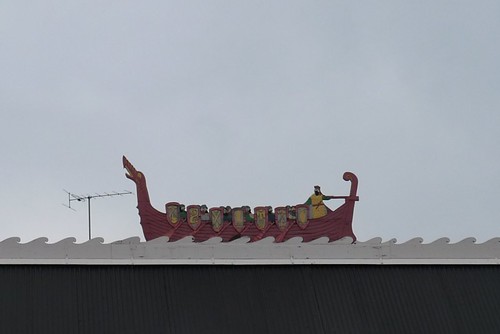
a viking boat on the roof (detail)

joe and i spent an hour in a danish bar on ingólfsstræti when we were in reykjavik in march. it was just the sort of dour nordic place you'd envision after reading a bunch of stieg larsson novels:** the carpet smelled of old lager and misanthropy, a couple of crew-cut older men were sitting by themselves and scowling at their newspapers, and the bartender seemed mortified when i asked for the house darts. it was a far cry from the tentative-but-ultimately-jolly bar scenes everywhere else in town, and it made me so sad for denmark; just think of all the dead and dying dreams that must have seeped into its gorgeous midcentury furniture.

i was leery of that fuggy danish manliness when, as i purchased michael chabon's wonder boys several months ago, amazon first tried to sell me on frans g. bengtsson's the long ships.*** what could a seventy-year-old novel about a-viking a thousand years ago (note that "viking" is both a noun and a gerund here; vikings go a-viking) have for me? chabon's gushy paris review essay introduces the long ships, and he will brook no skepticism: "[T]his novel, first published in Sweden during the Second World War, stands ready, given the chance, to bring lasting pleasure to every single human being on the face of the earth. [...] When you arrive at its bittersweet, but mostly sweet, conclusion, I trust that you will turn to your shipmate, your companion in adventure, and swear by ancient oaths, as I hereby swear to you: It is really good." well, i liked the master and commander movie back in the day, and that was a sausage party on the high seas. why not?

the long ships follows orm tostesson, a doughty young skanian son-of-a-thane who's clocked with an axe while defending the family sheep from marauding jomsvikings; he's spirited away with the livestock so that he can row in place of the man he killed and is a valued member of the crew until he's captured and enslaved by the caliph of córdoba. the long ships is full of enslavement and re-enslavement on all sides - women in particular tend to get smuggled around in barrels and dangled from the sides of ships - but the principals seem to take it in stride (as do a few of the women?), much as a taxi driver does when you cut him off for once. hauled from your ship and tossed ashore to grow limp like produce while your captors prep new shackles for you? ah, well; best to compose poetry and save your strength so that you'll be ready when the time comes to drown your overseer in boiling pitch. equal emphasis on the poetry and the pitch.****
So the Vikings were defeated, and their victors rowed ashore to examine what they had won and to bury their dead. They cleared the decks of the ship they had captured, throwing the corpses overboard, and began to rummage through its cargo, while the prisoners were led ashore and sat down on the beach, well guarded, with their arms bound. There were nine of them, all wounded. They waited for death, staring silently out to sea; bout there was no sign of Berse's ships or of their pursuers.

Toke sighed and began to mumble to himself. Then he said:

"Once, thirsty, I
Wasted good ale.
Soon shall I taste
Valhalla's mead."

Orm lay on his back, gazing up at the sky. He said:

"At home in the house
That saw me grow
Would I were seated now
Eating sour milk and bread."

But none of them was sicker at heart than Krok; for ever since the beginning of their expedition, he had regarded himself as a lucky man and as a hero, and now he had seen his luck crumble within the hour. He watched them throwing his dead followers overboard from what had been his ship, and said:

"The plowers of the sea
Earned for their toil
Misfortune and a foul
And early death."

Toke observed that this was a remarkable coincidence, that three poets should be found in such a company.

"Even if you cannot fully match my skill at composing verses," he said, "yet be of good cheer. Remember that it is granted to the poets to drink from the largest horn at the banquet of the gods."
oh, snap! predictably, the (frequent) nordic poetry slams are my favorite bits of the long ships; less predictably, perhaps, they jostle for favor with all sorts of things. i had an acute renaissance faire phase in elementary school / junior high / (cough) high school (i was wa-ay over at the wizardy end of the nerd spectrum), and it should go without saying that i enjoy an enthusiastic yuletide death match; i also enjoy viking curses ("may she toss perpetually in the whirlpool of hell among sword-blades and serpents' fangs!"), practicality ("It takes time for landlubbers to appreciate the beauty of life at sea. With this wind, though, they can vomit to windward without its blowing back into the face of the next man, and many quarrels between irritable persons will thereby be avoided."), and tolerance.
Brother Willibald bent down, picked up a large stone, and flung it with all his might.
"Love thy neighbor!" he grunted as it left his hand.
The stone struck King Sven full on the mouth with a loud smack. With a howl of agony, he crumpled on the horse's mane and slithered to the ground.
"That is what I call a good priest," said Rapp.
unlike chabon, i wouldn't argue that the long ships has something for everyone; i lent it to my friend megan, one of the most valiant readers i know, and she failed (though she strove mightily) to appreciate orm and his colleagues; she failed, in fact, to make it through the book at all. how, then, is one to know if it's worth one's while?
More years ago than I like to recall, I was a student of medieval literature at Cornell University. During my first year of graduate school I signed up for Old English, Introduction to Medieval French, Chaucer, Middle High German Literature, and the Icelandic Saga in Translation--we were serious students in those days. I learned a lot, but the Icelandic sagas completely bowled me over: Think spaghetti westerns with swords—only more thrilling. Except for the fact that it was written in the middle of the 20th century, Frans G. Bengtsson's magnificent book is essentially just such a saga, and if you love heroic literature, whether it be Njal Saga or Tolkien's Lord of the Rings or Philip Pullman's Dark Materials trilogy or Robert E. Howard's tales of Conan the Cimmerian, The Long Ships is the best end-of-summer treat you can possibly imagine.

(washington post book world columnist michael dirda, bn.com)
bearing in mind that my love for nearly all things even remotely icelandic undoubtedly clouds my judgment, i think dirda nails it. as the golden afternoons contract and it becomes necessary to snuggle beneath plaid things and take up tales of adventure, the strong-stomached among you should give orm & co a try; as david foster wallace noted in a childhood poem, they'll kill you very well.


VICTOR: you know what? i was going to say that i couldn't send anna to its maker in good conscience, but i'm feeling bloodthirsty. the long ships is the most entertaining thing i've read all year. the count is down.


imaginary reading group discussion questions

01 have you ever been to a danish bar? did it suck?

02 in happier news of danes (news of happier danes?), are you the person who told me i should listen to the raveonettes? you were so right.

03 is it granted to the poets to drink from the largest horn at the banquet of the gods?

04 if you find yourself on the nerd spectrum, where are you?

05 has fall fallen where you are?

06 what's the most entertaining book you've read this year?


*previous battle here.

**i've read one.

***the southern provinces of sweden belonged to denmark in 980-1010; while bengtsson was a swedish novelist, i lump him in with the mean old danes.

****"[Töglag] was the latest and most difficult verse-form that the Icelandic poets had invented, and indeed his poem was so artfully contrived that little could be understood of its content. Everybody, however, listened with an appearance of understanding, for any man who could not understand poetry would be regarded as a poor specimen of a warrior; and King Harald praised the poem and gave the poet a gold ring. Toke plunged his head between his hands on the table and sighed disconsolately; this, he muttered, was real poetry, and he could see that he would never be able to succeed in writing the sort of verse that won gold rings."

08.16.11


THUNDERTOME II: ROUND 5


SURVIVOR: anna karenina (leo tolstoy)*
CHALLENGER: wonder boys (michael chabon)


i won't pretend to have started reading wonder boys with anything like neutrality. the flawed-but-glorious film version (c. 2000, with michael douglas, tobey maguire, and robert downey, jr.) has a special place in my heart for being one of the first things both joe and i found riotously funny; i worried that the book couldn't possibly be as pleasurable as the movie had been. could the errol flynn conversation work twice?


wonder boys (1995) is michael chabon's second novel, written when he was a slightly larger fetus than he was when he wrote the mysteries of pittsburgh (which was pleasant enough, as i recall, though the only bit of it which really stuck with me was that the main character's love interest was called phlox).** it's a novel about grady tripp, a skirt-chasing, pot-smoking old author who hits the bar and the road with james leer, one of his writing students, as their university is consumed for the weekend by wordfest, a series of self-congratulatory lectures and parties for writers-, publishers-, and agents-to-be. here's a get-together at grady's place, left empty (except for his sexpot student boarder, hannah) after his wife learns of his affair with the dean's wife and leaves him:
On the sofa behind them a pair of my students, young writers of the Angry School who pierced their lips and favored iron-buckled storm-trooper footwear, had welded themselves into a kind of impromptu David Smith. On the stairs leading up to my bedroom sat three New York agents, better dressed and less drunk than the writers, exchanging among themselves delicate constructions of confidentiality and disinformation. And there were so many Pittsburgh poets in my hallway that if, at that instant, a meteorite had come smashing through my roof, there would never have been another stanza written about rusting fathers and impotent steelworks and the Bessemer converter of love.
this inside-baseball, writer-on-writers stuff could be terrifically annoying, but chabon marbles his wordfest with broad veins of absurdity; some of the more ridiculous conversations reminded me of twin peaks, or twin peaks if david lynch had decided to think about The Great American Novel instead of, you know, The Owls.***


more on that sexpot student boarder (played in the film by a pre-scientology katie holmes): as another reader notes, chabon does a decent job of steering clear of writing what garland grey at tiger beatdown calls a fond memories of vagina novel.**** this could of course simply be because he isn't yet a nasty old man, but i like to think that it's because hannah has some substance; she's fond of grady, but he's been overcooking his latest novel (wonder boys, and it's actually about a couple of guys named wonder) for a long time, and she knows it. happily, we never have to deal with the tragedy of a physical relationship between them.*****


we do have to deal with a physical relationship between the ass of a man named vernon hardapple and the hood of grady's galaxie after an ill-advised night at a local dive; for reasons i don't completely understand, the ass-denting scene gave and continues to give me great joy. it functions a bit like one of shakespeare's scenes for the groundlings: chabon layers his more serious observations about writers and their art between these marvelous little set pieces.
"Chaos," he said, rolling his window down, breathing it in like the smell of cut grass or the ocean. He shook his head admiringly. "What a mess."


"No kidding," I said, looking down at the pathetic remnant of Wonder Boys in my lap. I ought to have been pounding on the dashboard, I thought, and eulogizing sweet chaos, the opposite and the inhibitor of death, and stating, for the record, that Vernon Hardapple's breath had carried an anise whiff of Italian sausage and a rusty tang of beer. Ever since the day, nearly twenty-five years before, that I'd first fallen under the spell of Jack Kerouac and his free-form Arthurian hobo jazz, with all its dangerous softheartedness and poor punctuation, I had always, consciously and by some unthinking reflex of my heart, taken it as an article of faith that escapades like the rescue of James Leer from his Sewickley Heights dungeon, or the retrieval of the missing jacket, were intrinsically good: good for the production of literature, good for barroom conversation, good for the soul. Chaos! I ought to have been gulping it down the way Knut Hamsun, perched atop a locomotive as it hurtled across the American heartland, swallowed a thousand miles of icy air in a successful attempt to rid his body of tubercules. I ought to have been welcoming the bright angel of disorder into my life like the prickling flow of blood into a limb that had fallen asleep.
grady doesn't actually live in the absurd moments his agent (the first speaker above) and i love so well; he has a rakish side, but he's domesticated and he knows it.
On a day when my work hasn't gone well, I like to spend a couple of hours behind The Alibi's dented steel bar, and you can find me there on Tuesday nights after the advanced workshop lets out. You can look for the half-blind minotaur with the corduroy sport coat and the battered horsehair briefcase, at the far end of the bar by the jukebox, holding on to a mug of Iron City cut, for the sake of his health, with thin, sweet lemonade.
chabon would have a hell of a time spinning four novels out of him, as john updike did with harry angstrom - but i almost wish he would. fiction needs that kind of guy.


VICTOR: i'd really like to throw this one to chabon, but i think the beast from the east still has some fight in him. anna karenina continues, though i threw my knickers at wonder boys.


imaginary reading group discussion questions


01 have you read or seen wonder boys? if both, what'd you think of the casting?


02 "phlox" as a hot-girl name: inspired or questionable?


03 is it less annoying when a young male novelist writes about an old male novelist than it is when an old male novelist writes about an old male novelist?


04 if you found yourself full of tubercules, what cure would you take?


05 have you ever had a briefcase?


06 with what do you cut your beer?


*previous battle here.


**he was 25 when he published pittsburgh and 32 for wonder boys.


***to be clear, i am by no means suggesting lynch should have thought about The Great American Novel. i love The Owls, though they scare the crap out of me.


****“I am a writer in the twilight of my years, bored with life and my sexual powers. Oh, wait: pussy." see amis, martin; marquez, gabriel garcia; roth, philip; rushdie, salman; updike, john, &c.


*****while grady lacks self-control, he never goes so far off the rails that we stop liking him. almost all of chabon's central characters here, now that i think about it, are quite likeable.


06.27.11

THUNDERTOME II: ROUND 4

SURVIVOR: anna karenina (leo tolstoy)*
CHALLENGER: the passage (justin cronin)

randall flagg

after all that talk of beach reading for our trip to iceland back in march, i packed predictably:** i ended up burning the midnight oil in reykjavik with a massive advance reader's edition of justin cronin's the passage, thanks to a friend who knows of my fondness for vampires, apocalypses, and vampire apocalypses.

cronin, an iowa writers' workshop grad and the author of an award-winning collection of interconnected stories and a novel about a fishing camp in maine, was instructed by his daughter to "write about a girl who saves the world;" less than overwhelmed, perhaps, by the revenues generated by collections of interconnected stories and novels about fishing camps in maine, he wrote about vampires. more precisely, he wrote about an unscrupulous military research project which zaps hardened criminals' thymus glands and (instead of just making them more or less immortal, makes them immortal and) turns them into vampires. for reasons which are never made especially clear, the project's final subject is not a murderer/rapist plucked from death row but amy, a keane waif from iowa whose desperate mother dumps her off with a magical nun. instead of turning her into a twelfth slightly-phosphorescent killing machine which lopes across the country unzipping hapless victims' rib cages like so many bananagrams carrying cases, amy's tweaked thymus turns her into an insufferable child messiah/vampire whisperer who's inexplicably irresistible to government employees such as her kidnapper, fbi agent brad wolgast, a good man haunted by his deeds.

still with me? now it's ninety years later, the beast is loose in the streets of bethlehem, the rats are in the corn, and nearly everyone has long since been bananagrammed. survivors have walled themselves into first colony, a fort which they defend from the "virals" with bright lights and off-putting new social conventions. children born in the fort, for example, are separated from their parents at birth and supervised by guards and caretakers who refer to them as "littles." the fortified-nursery strategy is a perfectly sound one, but "littles" - look, i have dear friends who love and have used the term often and affectionately in non-vampire-apocalypse contexts for years. i'm the daughter of an art history major, "littles" as a term for children takes me straight to the terrifying baby-men who hang with the virgin mary in medieval art, and it creeps me out. know what else was all over the place in the fourteenth century? the black death, and there's a lesson in that. i think we can differ in our feelings about various terms and remain respectful of one another, but don't come crying to me with your buboes, is what i'm saying.***

sister lacey the magical nun is approximated in the fort portions of the story by ida "auntie" jackson, the sole survivor of a convoy of children dispatched decades upon decades ago to escape the virals' assault. sympathetic readers see her cryptic nattering and mysterious tea preparation as a tip of the hat to mother abigail in stephen king's the stand; i decided cronin's a shoplifter long before i got to auntie's uncharming repartee, and i have little patience for characters like her as expository devices anyway. ditto for alicia "starbuck" donadio, a tough-as-nails (hot) maverick soldier type whose bravado endangers the colony. how can i be expected to believe cronin isn't simply exploiting sci-fi and horror fans when he populates his story with other writers' characters?

the passage is a page-turner, make no mistake; cronin delivers some fine action sequences, his highbrow petticoat peeps out regularly in his (non-vampy-death-scene) descriptions, and his plotting is tight. i had a grand old time reading about the end of the world late at night at the hotel borg. that said, i genuinely love some of the houses at which he's trick-or-treating,; going forward (like deborah harkness's a discovery of witches, the passage is the first installment in a trilogy****), i expect substantial proof that he isn't simply in the neighborhood for the sugar.


VICTOR: anna karenina; how does one say "bananagrammed" in russian?


imaginary reading group discussion questions

01 how old will cronin's daughter be when she's allowed to read the passage?

02 is it even possible for military medical experiments to be a good idea?

03 who determined that suspenseful horror-novel killings should sound like someone removing a windbreaker and eating a fruit salad in the next room?

04 do medieval baby-men bother you?

05 have you read and/or seen the stand?

06 is being a page-turner an excuse for lack of originality?

07 why do you think cronin wrote the passage?

08 can you forgive me for that weird halloween conclusion? not sure what happened there.


*previous battle here.

**i read zeitoun when we were in montreal this past fall; i was better about not waking joe up and reading him the especially depressing parts this time.

***full disclosure: i call chuck our little bubo.

****per interviews, this is the road novel; the sequel will be spytastic, and the finale will be all-out war, man.

05.19.11

THUNDERTOME II: ROUND 3

SURVIVOR: anna karenina (leo tolstoy)*
CHALLENGER: war and peace (leo tolstoy)

reading war and peace is the THUNDERTOME equivalent, i think, of occasioning and blogging a birth story; i'll skip over most of the grand-guignol and/or fairly obvious implications of that analogy and say that strangers were terribly kind to me on the subway for the last few months and i'd think twice about doing it again without drugs.

bearing in mind that i don't speak much russian, you probably don't, either, and discussing the relative merits of various translations can make it awfully difficult to operate heavy machinery, i'll open with a few words about the edition i chose. i went with aylmer and louise maude, the same husband-and-wife team that tackled my edition of anna karenina; both maudes were friends of tolstoy's, aylmer visited his estate several times and eventually became his biographer, and count leo is said to have said that "better translators...could not be invented." the maudes certainly have a leg up on other translators when it comes to biographical footnotes: aylmer pops up all over the place to point out where characters' opinions overlap with tolstoy's own, and where those characters themselves might have counterparts in his family (old count rostov, for example, is ilya andreyevich tolstoy, leo's paternal grandfather). they're also helpful as a general proposition: i myself hadn't noticed that (the fictional) napoleon takes snuff whenever he's upset. cheers, maudes!

there are two big issues with this translation, depending on where you're sitting. as james wood puts it in his admiring new yorker review of richard pevear and larissa volokhonsky's translation of war and peace,
Literary translators tend to divide into what one could call originalists and activists. The former honor the original text’s quiddities, and strive to reproduce them as accurately as possible in the translated language; the latter are less concerned with literal accuracy than with the transposed musical appeal of the new work. Any decent translator must be a bit of both.
wood puts pevear and volokhonsky in the first category and compares them favorably with the maudes, whose activism, he argues, strips tolstoy's language of much of its urgency (that he used the same descriptors over and over is part of his vitality and charm, and so on). at the other end of the spectrum, the australian's peter craven argues that the maudes' activist translation gives their texts a "flow and purr" which glides across the "hideous infelicities" of, you know, translating a crazy language such as russian (no matter whose grammar is on the table, really) into english. he also notes that david foster wallace, for what it's worth, found pevear/volokhonsky "somewhat starchy."** me? i love a good russian quiddity; one of my favorite things about gogol's dead souls, for example, is how the omniscient narrator participates in the story by saving long expository paragraphs for real-time lulls (such as a character descending a staircase). that said, i needed all the help i could get with my first slog through war and peace, and i'm comfortable with the idea that some of tolstoy's language was pre-chewed for me.

the second issue with the maude war and peace is both more superficial and infinitely more serious: the summarizing chapter subtitles spoiled every last plot point. twelve hundred pages of napoleonic wars and narcissistic russian tweens are no joke, team; when a chapter begins with
20. Pierre at the Rostovs'. Natasha again takes up her singing. Sonya reads Alexander's manifesto. Petya declares he will enter the army. Natasha realizes that Pierre loves her. He decides to cease going to the Rostovs'
what's left? i appreciated knowing when to brace myself for a torrent of tolstoy's amateur historiography, but jesus. if you're able to find a maude edition without the spoilers, then, i think it's a solid choice; if not, first-time reader, get thee a patient friend with a fat black marker or find another translation.

right, then. plot! a wise fellow reader*** noted that war and peace is full of "frat boys, man," and it is indeed; the first few books are rampant with overfunded st. petersburg man-boys who get drunk and dangle out of windows, tie a policeman to a bear and dump them in a canal, and so on. the year is 1805, napoleon is charging east, and many of these underoccupied rascals become underoccupied officers in emperor alexander's army. the man-boy pierre bezukhov (the portly, illegitimate son of a fantastically wealthy count) inherits his father's fortune, decides to skip the war, and is instead married to a slippery society woman; he then pursues fraternity of another sort and becomes a freemason (tolstoy's laborious descriptions of the russian masons' initiation ceremonies are war and peace's equivalent of the intricate voting procedures in anna karenina, with masks and swords taking the place of lockboxes and ping pong balls). as napoleon's men near and occupy the towns en route to moscow (and, eventually, moscow itself), pierre wanders among the russian troops and straight through battlefields; though tolstoy starts in on battle scenes at the beginning of the book, it isn't until pierre witnesses the execution of russian prisoners toward its end that we're able to appreciate what's at stake. i admit that i found those chaotic early scenes deeply annoying, but tolstoy knows what he's about; as wood puts it, he's estranging us from what we know of war ("again and again, he reverses the martial tapestry and shoves the clumsy, illegible tufts of thread at us"). the final, intimate bits of violence at the end of the novel, offered from a perspective that's been essentially childlike for a thousand pages or so, made me shiver.

war and peace is also the story of two families. one is the bolkonskis of bald hills, an abusively moody old widower and his sober son (andrew; there's that activist translation for you) and daughter (mary; ditto); according to aylmer maude, prince andrew voices many of tolstoy's feelings about war. he's one of the few officers who seems emotionally invested in the conflict, he delivers a number of nihilistic speeches in the last third of the book as whistling mortars rearrange the scenery he chews, and he appears to be mostly indestructible. in the city, in turn, we meet the rostovs, a good-natured, messily self-indulgent crew on their way out of the upper class thanks to a patriarch and eldest son who can't keep their wallets in their pants. young natasha rostova is probably representative of something irrepressible and joyous about the russian spirit; she's also the humanoid equivalent of total request live, and she terrifies and repulses me (i strongly suspect one of her love interests dies to escape her). war and peace's families heave about much as various families do in anna karenina; tolstoy streamlines their interactions and paces their intrigues more naturally in the latter, however. most of war and peace's domestic plot development takes place in an inelegant rush at the end of the novel, and i was left with the distinct feeling that ol' leo was tossing out a handful of awkward fifth-act marriages to wrap things up and set the stage for his lethal concluding nonfictional discourse on conflicts and history.

on that discourse, i'm aware that looking to tolstoy for coherent historiography is a bit like looking to malcolm gladwell for a bodice-ripper, but ah, my foes, and oh, my friends, its torpid mediocrity is still a shock. quoth wood,
[T]he epilogue concludes not with the fictional narrative but with a final, dragonish blast from the flaming, irritable, essay-writing Tolstoy, eager to put us right about freedom and predestination. “War and Peace” is “not a novel” but a frequently essayistic national epic...
were i a patriotic man of letters with a strong interest in shaping the way future generations understood my century's big-ticket verbs and a fondness for the rhetoric of repetition, i could imagine wanting to describe war in a thousand slightly different ways. as i am but a youngish editor who blogs for personal amusement and is keenly aware that most of her handful of readers feel at the end of THUNDERTOME that they've run a marathon in ice skates, i'll ignore the epilogue and give you a brief moment with napoleon instead.
"Our fire is mowing them down by rows, but still they hold on," said the adjutant.
"They want more!..." said Napoleon in a hoarse voice.
"Sire?" asked the adjutant who had not heard the remark.
"They want more!" croaked Napoleon frowning. "Let them have it!"
Even before he gave that order the thing he did not desire, and for which he gave the order only because he thought it was expected of him, was being done. And he fell back into that artificial realm of imaginary greatness, and again - as a horse walking a treadmill thinks it is doing something for itself - he submissively fulfilled the sad, gloomy, and inhuman role predestined for him.
that's the leo i know and love.


VICTOR: anna karenina. tolstoy had smoother moves once war and peace was under his belt; napoleon in the guts of a novel about families is as unwieldy as the little prince's elephant in a snake. indeed, why is it that big people always need explanations?


imaginary reading group discussion questions

01 have you read war and peace? would you read it again?

02 activism v. originalism: pick a side.

03 have you ever felt you deserved a push present for finishing a book?

04 did you know nine inch nails' "dead souls" from the crow soundtrack was a remake of a joy division b-side? i sure didn't.

05 what would you use to tie a policeman to a bear? assuming you had a good reason for doing so, i mean.

06 why would one need to tie a policeman to a bear?

07 when was the last time a battle scene made you shiver?

08 anna karenina's kitty scherbatsky and war and peace's natasha rostov: which one has a friends-only facebook profile? (not a rhetorical question. they both have facebook profiles.)

09 okay, malcolm gladwell. what's your bodice-ripper called? (no, not the ripping point).

10 why do big people always need explanations?


*previous battle here.

**in "joseph frank's dostoevsky," from consider the lobster.

***if possible, have a wise fellow reader when attempting war and peace. not mine, mind you - i need her as a wing man when i read other things.